
Foreign language students often face problems reaching their potential in schools because teachers/educators are struggling with:
- Understanding the strategies of teaching migrant students
- Understanding the process of integration of diverse students
- Clarifying teachers methods of teaching in different learning situations
- Increase of teachers’ awareness how to deal with diverse experience
In the world, students who are learning a foreign language have encountered various problems and difficulties about factors that affect this learning process. Moreover, in learning a foreign language, the effects of motivation and culture are inevitable
BUT
Teachers in schools with diverse student populations recognize that handling cultural diversity in class is difficult and requires preparation. Often, students differ not only in the knowledge and skills they have acquired in their early years, but also in the strategies they use to approach and solve problems. Mathematics teachers who are not fully aware of these differences in approaches to mathematics problems, for example, or who “play down” cultural differences and instead argue for general notions of ability and equity, are ill-equipped to build on the knowledge and experience that students from different backgrounds bring to class.
- Knowledge objectives
– Understand how you as a teacher can differentiate, adapt and evaluate teaching methods that meet the students’ different linguistic needs and develop the students to become independent learners
– As a teacher you need to have a basic understanding of concepts, vocabulary and how to support students learning these across languages, skills and subjects.
– How to understand, recognize, respect, communicate and work effectively across cultures in the classroom
- Skill objectives
– Learn to facilitate a learning environment that builds respectful bridges between the different students’ language identities, creates unity and curiosity for different cultures and languages.
– Be able to test and map vocabulary and skills for foreign language learners
- Attitude objectives
Understand how you as a teacher can recognize, respect, communicate and work effectively across cultures in the classroom.
- Culture factors – are a set of values and ideologies of a particular community or group of individuals. It is the culture of an individual which decides the way he/she behaves. In simpler words, culture is nothing but the values of an individual.
- Gender factors – Gender refers to the socially constructed roles, behaviors, expressions and identities of girls, women, boys, men and gender diverse people.
- Native language barrier – A language barrier is any linguistic limitation that creates confusion or prevents comprehension.
Anxiety behavior – Common anxiety signs and symptoms include: Feeling nervous, restless or tense. Having a sense of impending danger, panic or doom. Having an increased heart rate. Breathing rapidly (hyperventilation).
When examining trends in performance differences between immigrant students and students without an immigrant background, it is important to consider them in the context of changes in the socio-economic profile of students. Education outcomes have improved in many countries of origin, and migration policies have become increasingly skill-selective.
Learning a new vocation or re-learning one that was previously mastered is considered one of the essential pathways for migrant integration into the labor market. Thus, vocational educators should have competencies that support teaching adults with diverse educational, vocational, cultural, and linguistic backgrounds, and enhance their participation in the learning community.
This e-learning module will focus on what educators having adult migrant students in their class should focus on when talking about learning and teaching. This includes an understanding of the core aspects that trainers and migrant students refer to when talking about learning and teaching, and second, they have to examine how these core aspects are related to learning in a new context and teaching adult migrant students. In addition, the module will deepen the understanding of relationships between learning, teaching, and integration.
Major knowledge is that both trainers and migrant students themselves associate difficulties in learning, teaching, and integration with the existence of cultural differences and poor language skills. However, personal differences and life situations play an important aspect in learning, teaching, and integration of adult migrants. Learning in a new context and teaching migrant students stirs contradictory feelings and are recognized as difficult activities accompanied by feelings of uncertainty and unpredictability, but also the joy of learning something new too.
It is also normal among teachers and educators to have negative beliefs and misconceptions about migrants, their backgrounds, and competencies as the main barriers to make the most out of some modes of working (like group work or workplace learning) and the possibility of supporting migrants’ integration through participation in formal education.
The e-learning module will focus on a collective participation in the learning process and a need to look at differences as offering a positive contribution. Successfully approaching migrant students requires taking into account the particularities of adult migrants as learners while being able to concentrate on existing similarities.

- Provide specific, formal training on diversity, intercultural pedagogy and language development for school leaders and teachers, in both initial and in-service training programmes.
- Train teachers in formative assessments, through which teachers track students’ progress and adjust their teaching to meet individual students’ needs.
Offer incentives for teachers and school leaders to work in disadvantaged schools. These can include specialised initial and in-service training, mentoring for beginning teachers working in these schools, financial rewards and professional recognition.
Mark the correct answer:
However, personal differences/abilities and life situations/lessons play an important aspect/factor in learning, teaching, and integration of adult migrants. Learning in a new context and teaching migrant/native students stirs contradictory feelings and are recognized as difficult/easy activities accompanied by feelings of uncertainty/certainty and unpredictability, but also the joy/despair of learning something new too.
What are the challenges for the diverse students in the classroom?
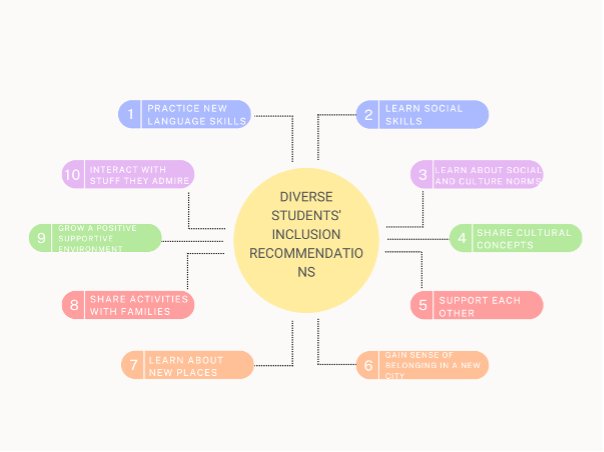
Students from different cultures and ethnos are often at the forefront of working out what it means to be a new arrival in a different country. They feel the anxiety that comes with being the new girl or boy at school. They’re in an environment that emphasises “integration” – learning new rules, making new friends, possibly learning a new language and grappling with a new testing regime. Seeing all of these changes, teachers may not realise how important it is simply for students to feel included. Even making their home countries a feature of lessons in, for example, geography can help them feel more at ease. It is a valuable opportunity for them to engage them to contribute. If their identities are ignored these students may feel detached from school. This sense of detachment has been shown to negatively affect learning. It may also have more serious consequences for a student’s sense of belonging and, ultimately, well-being.You can make them or assign them to take photographs in school as a way of explaining and engaging with their environment as a place of inclusion and exclusion.
- What are barriers both sides have?
Students struggle with the idea that they are free to make suggestions in the class. When teachers try to come up with a list of advice for students, it turned into a list of rules for them to keep. Do. Not getting the students to introduce themselves on the first day, it is the opposite of what the children wanted – to be welcomed quietly while sitting with a classmate.
You should start building their capacity so that they can see themselves as individuals who have something important to say. Simply saying this “We, as teachers, know many things about school, but you also know many things that I don’t know l” this can empower them.
Be creative in a nonstandard way. Use picturebooks, photography, music and dance. These methods can engage new arrivals in a way that doesn’t demand great proficiency or confidence in using the school’s language. Of course, the school day is very demanding for both learners and educators, but finding time to do something outside of the normal routine may pay great dividends in learners’ confidence and well-being.
Make sure that their identities are discussed and valued in the curriculum, and reflected in their school’s ethos. We must allow them to “find themselves in the story” of what they are learning in school. This will ensure their confidence in who they are, and is particularly important for marginalised groups. Choose them to take part in simple projects will make them feel privileged and valued. Additionally, group work is helpful in creative problem solving, in learning new concepts, in developing thinking skills, and the ability to consider the perspective of another person. Seeing a problem in a different way creates a lot of potential for students’ learning as it leads to an even deeper understanding of an explored issue.
How can teachers be aware of what challenges they could meet in the classroom?
Migrant students are a part of our society. They must be included – and this will happen best when their own voices and stories are heard.
Lack of experience with other cultures.
Lack of understanding how to teach to diverse needs.
Lack of motivation, differences in cultural expectations
Lack of family support for the student (academically).
Lack of pictures in textbooks depicting multi cultures and handicapped (challenged) individuals.
How do teachers support diverse learners? By having an elastic, accepting, and caring mindset, providing direct instruction, creating time for collaboration, and teaching advocacy are ways to construct an effective learning environment for all of our students who each have a unique and developing mind.
- How can the teachers manage diversity in the classroom
Get to Know Your Students
Ensuring that cultural awareness is promoted in the classroom starts with the teacher understanding each individual student. Take the time to learn about each student’s cultural background, hobbies, learning styles, and what makes them unique. Demonstrating a genuine interest in learning about each student and their culture will help establish trust and allow you to form a bond with them so they feel valued. If students feel appreciated by and comfortable with the teacher, there’s a better chance they’ll feel comfortable talking with and respect their peers in the class – and communication is the core to a culturally aware and inclusive classroom.
Maintain Consistent Communication
Aside from getting to know your students, teachers should also continue to maintain ongoing communication throughout the semester or school year. Scheduling 1-on-1 meetings with students to “check in” every so often will allow you to consistently improve how accessible the classroom is to everyone. Students can talk about whether they felt included in the classroom culture. This can help identify issues or ways to improve the overall experience. It’s also an opportunity to discuss their progress in the class and offer guidance on how they can improve, based on their individual needs as a student.
Acknowledge and Respect Every Student
It’s also important for students to celebrate and respect their own diverse backgrounds, as well as each other’s. When appropriate, teachers should encourage students to research and learn about their own ethnic and cultural backgrounds. This allows them to better understand their own culture as well as the differences and nuances with their peers. As a bonus, this can be a great ice breaker assignment, allowing students to give presentations about their family traditions and culture to help expose the class to concepts outside of their own familiar comfort zone. Acknowledging these differences and creating a safe space for discussion helps promote understanding in the classroom and beyond. Also, as you encourage students to learn about their diverse backgrounds, remember to take the time to highlight what’s offensive and the distinction between cultural celebration and appropriation.
Practice Cultural Sensitivity
While it’s important to keep an open dialogue amongst students, it’s equally as important to make sure you’re being sensitive to everyone’s culture, beliefs, and language concerns. Take the time to understand each student’s cultural nuances – from learning styles to the language they use – and use these insights to design your lesson plans. For example, provide English language learners with appropriate and relevant resources that help them improve their English comprehension skills. Rather than teach with a traditional lecture style, create learning experiences that are more interactive and require collaboration. These considerations will help ensure that every student feels included, is given the space to learn in their own way and is given a chance to succeed.
Incorporate Diversity in the Lesson Plan
The classroom environment is important for fostering cultural awareness, but you also should ensure diversity is represented in your actual lesson plan. For example, broaden history lessons so that they encompass the world beyond United States history and culture. Or, use references and analogies to other cultures in your lessons and assignments to help students with diverse backgrounds personally connect. Another great strategy is bringing in diverse speakers to add varying points of view and real-life context to different subjects. There are several ways you can ingrain cultural awareness and diversity into your lesson plan, and it will vary depending on the cultures represented in your classroom and the course you’re teaching. Regardless of the subject, always try to present and connect lessons to real-world issues. It’s easier to promote cultural awareness within your lessons when there’s a real example for students to relate to.
Give Students Freedom and Flexibility
Teachers often feel like they need to take on a strict, authoritative approach when it comes to managing their classroom. The most valuable lessons are often learned through a student’s own experiences, so giving them some freedom in the course encourages more connection to the curriculum. Allow students to read and present their own materials that relate to the fundamental lesson so they can approach the topic from their own perspective. As a teacher, you can act as a facilitator and encourage conversation and healthy debate between diverse opinions. Group assignments are also a great way to expose students to diverse perspectives, allowing them to work together to explore and solve a problem. This will also help prepare them for a diverse workforce where they’ll have to partner with a range of people to accomplish their professional goals.
- How can teachers be more effective in diverse classrooms?
Teachers can include a diverse range of perspectives by introducing diverse authors and historical figures into teaching materials. This will help all students understand and appreciate diversity more. Diverse learners will be able to be inspired by learning about people who they can look up to and learn from.
Fill the gaps with the correct words:
- Demonstrating a genuine interest in learning about each student and their culture will help establish trust and allow you to form …………… with them so they feel valued. a bond
- Scheduling 1-on-1 meetings with students to “check in” every so often will allow you to consistently improve how…………… the classroom is to everyone. Accessible
- Acknowledging these differences and creating …………… for discussion helps promote understanding in the classroom and beyond. a safe space
- Take the time to understand each student’s ……………… – from learning styles to the language they use – and use these insights to design your lesson plans. cultural nuances
- Regardless of the subject, always try to present and connect lessons to real-world issues. It’s easier to promote ……………………… within your lessons when there’s a real example for students to relate to. cultural awareness
You as regular teachers should:
- various aspects of diversity and the challenges associated with them
- international and national regulatory frameworks and how they are (not?) projected at school level
- the role of the teacher as diversity manager
- To stimulate reflection and critical thinking
- To share opinions and experiences
- To learn about and reflect on positive and negative practices
- To inspire positive changes (on a personal, inter-personal and institutional level)
Take a trip in here: https://teach-d.de/managing-diversity-at-school/
Assess yourself here: https://teach-d.de/managing-diversity-at-school/
Being a non-native student creates many limitations and challenges to learning in a new country. Communicating with fewer linguistic resources than natives often put migrants in a disadvantaged position. Living, working, and studying in a more or less new setting requires adult migrants to have more complex communication skills than natives in the same situation. These challenges include the feelings that they are not part of class; lack of experience to handle linguistic needs; large number of learners in language classroom; the strong influence of first language; inadequate time to address each learners’ needs, and language policy not being supportive.
Students may perceive that they do not “belong” in the classroom setting — a feeling that can lead to decreased participation, feelings of inadequacy, and other distractions. Teachers may make flawed assumptions of students’ capabilities or assume a uniform standard of student performance. Teachers may themselves feel out of place based on their own ascriptive traits (i.e. differences based on class, privilege, etc.).
Identifying and thinking through notions of difference and how they affect the classroom allow both students and teachers to see the classroom as an inclusive place.
While many discussions concerning diversity focus on talking about the importance of diversity and recognizing difference, it is equally important to move to the next step: incorporating specific tips for addressing differences and how they play out.
One way to form strategies for promoting an inclusive classroom is to use self-reflection and think of potential classroom scenarios and how one might address them. The solutions to such scenarios are ones that each teacher should consider for him- or herself, since there are no immediate right or wrong answers.
Make it Personal
Provide opportunities for students to share their own experiences and perspectives. Students learn from each other and the various perspectives and existing knowledge their fellow students bring to the table. Activities such as a fishbowl activity or reverse circle discussion activity can encourage and direct these challenging conversations.
Include Various Perspectives
Provide a variety of perspectives on the topics you teach. For instance, literature that comes from only one perspective lacks depth. Varied perspectives might offer new ideas and unique views. One example would be to teach a World War II class from an American historian’s perspective only. The look into that historic moment will be rather narrow. Include literature from the experiences of other groups such as concentration camp survivors, German foot soldiers, French resistance workers, and Vichy government officials. As much as possible provide content from diverse perspectives or created by individuals from differing backgrounds.
Know Your Students
Get to know your students. Invest time to focus on getting to know your students. The impact may surprise you. The simple gesture of addressing a student by their name demonstrates care and concern.
Respect Diverse People
Establish respect for the values of diverse peoples by using specific examples. Examples that demonstrate a respect and appreciation for diverse peoples and cultures. Use language that is gender neutral or takes into consideration the gender identity of students.
Respect Diverse Talents
Students not only come from diverse backgrounds, ethnicities, race, and gender, but students also bring different talents and styles of learning. All students should have the opportunity to learn in a way that works for them and they should be able to showcase their talents.
You can do this through classroom icebreakers (.pdf).
True or false
- Communicating with fewer linguistic resources than natives often put migrants in a advantaged position.
- Teachers may make flawed assumptions of students’ capabilities or assume a uniform standard of student performance.
- One way to form strategies for promoting an inclusive classroom is to use self-reflection and think of potential classroom scenarios and how one might address them.
- Being a non-native student creates many opportunities to learning in a new country.
- Identifying and thinking through notions of difference and how they affect the classroom allow both students and teachers to see the classroom as an inclusive place.
A case task:
- Yous of from Afghanistan 18 years old he came to Bulgaria 2 years ago as an asylum seeker. Since he is therefore allowed to work in Bulgaria, he is looking for a job to make a living for him and his family. He has not been to school in Afghanistan like over 50 percent of the male adults in Afghanistan and like over 87 percent of female adults in Afghanistan (UNESCO-Institute for Statistics 2006). In Afghanistan he has worked for many years as a mechanic, learned on the job, as many of the illiterate male immigrants have worked in trades learned with a master of a trade. While in Afghanistan he was a craftsman, in Bulgaria with its high literacy standards he faced many difficulties to get a job because of his low literacy skills. He cannot spend years exclusively going to school. He needs to get a job soon and has to improve his language skills for working. So he will need courses that he can attend in the evening, only some days a week, not every day. He began his attendance at the first level (of four levels) of courses with no knowledge of reading and writing at all, since he has not been to school in Afghanistan and cannot read Farsi, his first language. In this course he was not „only“ learning reading and writing, the course is also designed to improve his oral competences of Bulgarian. Yousof from Afghanistan was 18 years old when he came to Norway 2 years ago as an asylum seeker. At first, he was looking for a job to make a living for him and his family, but realised that most jobs required both language skills and formal VET education. He joined the language training for asylum seekers, having little knowledge of reading and writing in his own language Farsi. He had a fast progress and after only 1 year of learning Norwegian he had reached the level B-1 and was able to join a normal VET Class in mechanic.
In one of your classes, you focused on work life skills and the importance of showing initiative at workplaces. You noticed Yousof was a bit quiet and ask if he understood the task. He said yes, no problem teachers. In order to create a more real-life experience within the topic for the students, you organised a group work, where each group got a task to solve. You noticed there was a great engagement among the students just Yousof seemed unengaged, and you got a bit irritated and ask him why his thought this topic was so boring.
Task
- Which signs of learning challenges based on he being a foreign language learner do you see.
- Why do you consider them as challenges? c. How could you as his teacher deal with them in order to improve his learning outcome of your teaching?
In one of your classes, you focused on work life skills and the importance of showing initiative at workplaces. You noticed Yousof was a bit quiet and ask if he understood the task. He said yes, no problem teachers. In order to create a more real-life experience within the topic for the students, you organised a group work, where each group got a task to solve. You noticed there was a great engagement among the students just Yousof seemed unengaged, and you got a bit irritated and ask him why his thought this topic was so boring. Task In this case story there are several warnings for the teachers that Yousof have learning challenges as “Foreign language learner”. a. Which signs of learning challenges based on he being a foreign language learner do you see. b. Why do you consider them as challenges? c. How could you as his teacher deal with them in order to improve his learning outcome of your teaching?
