
Welcome to our training for mental health issues: This online course will provide you with content about different forms of mental health problems and is aiming to sensitize the learner’s perception for special psychic needs.
We hope to teach trainers and teachers with accessible and comprehensible ideas and information on the almost infinite realm of mental health issues and psychic disorders. According to the World Health Organization one in every eight people were living with a mental disorder, mostly anxiety and depressive disorders. In 2020 the number increased significantly due of the COVID-19 pandemic.
These official figures show mental health is a huge topic among many other human disorders. We tried to gather the most important and common mental health issues in this module recognizing we cannot cover the full spectrum. The selectively chosen and presented topics are mostly own examples from our schools and organizations.
- What are we talking about when we mean health issues? A short definition
- Difference between mental and physical health problems
- Different forms of mental health issues
- What is the responsibility of a teacher dealing with young people’s health issues
- How to handle the problem in a proper way – practical advices
- Introduction – Importance of dealing appropriately with mental health disorders
- Case Studies – Real classroom problems visualized via case studies
- Practical tools – Techniques and approaches to handle problems caused by mental disorders
- Roles and responsibilities – What roles and responsibilities do teachers and learners have?
Final assessment – A practical learning case
Definition of Health problems:
Specification of mental and physical health issues
Definition of various forms of mental health like ADHD, neurasthenia, autism
In this section we provide some basic and short definitions of the most common mental health disorders. We specify on six disorders:
- Depression
- Anxiety Disorders
- Disruptive behaviour and dissocial disorders
- Learning disorders
- Emotional instability
- Addiction
Definitions (quoted by WHO 2022[1]):
- Depression
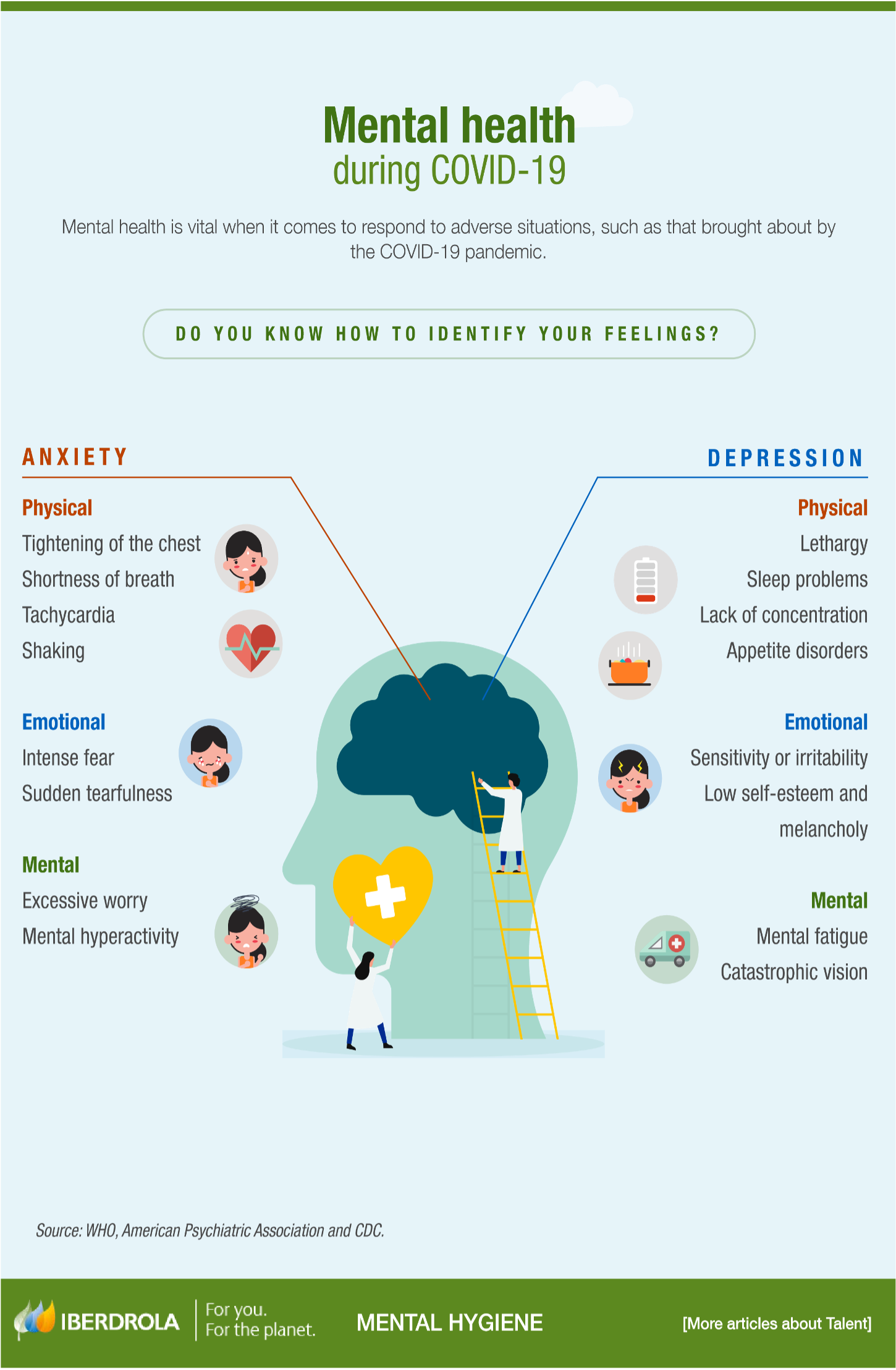
In 2019, 280 million people were living with depression, including 23 million children and adolescents (1). Depression is different from usual mood fluctuations and short-lived emotional responses to challenges in everyday life. During a depressive episode, the person experiences depressed mood (feeling sad, irritable, empty) or a loss of pleasure or interest in activities, for most of the day, nearly every day, for at least two weeks. Several other symptoms are also present, which may include poor concentration, feelings of excessive guilt or low self-worth, hopelessness about the future, thoughts about dying or suicide, disrupted sleep, changes in appetite or weight, and feeling especially tired or low in energy. People with depression are at an increased risk of suicide. Yet, effective psychological treatment exists, and depending on the age and severity, medication may also be considered.
- Anxiety Disorders
In 2019, 301 million people were living with an anxiety disorder including 58 million children and adolescents (1). Anxiety disorders are characterised by excessive fear and worry and related behavioural disturbances. Symptoms are severe enough to result in significant distress or significant impairment in functioning. There are several different kinds of anxiety disorders, such as: generalised anxiety disorder (characterised by excessive worry), panic disorder (characterised by panic attacks), social anxiety disorder (characterised by excessive fear and worry in social situations), separation anxiety disorder (characterised by excessive fear or anxiety about separation from those individuals to whom the person has a deep emotional bond), and others. Effective psychological treatment exists, and depending on the age and severity, medication may also be considered.
- Disruptive behaviour and dissocial disorders
40 million people, including children and adolescents, were living with conduct-dissocial disorder in 2019 (1). This disorder, also known as conduct disorder, is one of two disruptive behaviour and dissocial disorders, the other is oppositional defiant disorder. Disruptive behaviour and dissocial disorders are characterised by persistent behaviour problems such as persistently defiant or disobedient to behaviours that persistently violate the basic rights of others or major age-appropriate societal norms, rules, or laws. Onset of disruptive and dissocial disorders, is commonly, though not always, during childhood. Effective psychological treatments exist, often involving parents, caregivers, and teachers, cognitive problem-solving or social skills training.
- Learning Disorder[2]
Learning disorders involve an inability to acquire, retain, or broadly use specific skills or information, resulting from deficiencies in attention, memory, or reasoning and affecting academic performance. […] Learning disorders are neurodevelopmental disorders. Learning disorders are quite different from intellectual disability (previously called mental retardation) and occur in children with normal or even high intellectual function. Learning disorders affect only certain functions, whereas in children with intellectual disability, difficulties affect cognitive functions broadly.
- Emotional Instability[3]
Emotional instability refers to rapid, often exaggerated changes in mood, where strong emotions or feelings (uncontrollable laughing or crying, or heightened irritability or temper) occur. These very strong emotions are sometimes expressed in a way that is not related to
[1] https://www.who.int/news-room/fact-sheets/detail/mental-disorders
[2] Quoted by: By Stephen Brian Sulkes, MD, Golisano Children’s Hospital at Strong, University of Rochester School of Medicine and Dentistry, Learning Disorders. https://www.msdmanuals.com/home/children-s-health-issues/learning-and-developmental-disorders/learning-disorders
[3] Quoted by: Medigoo resident editors. Mr. Mika Karilahti, Doctor of Science (D.Sc.). Emotional Instability. https://www.medigoo.com/articles/emotional-instability/the person’s emotional state. […] Emotional instability can be caused by chemical imbalances in the brain, such as a decrease in serotonin (as see in depression) and also fluctuating levels of dopamine and serotonin (as seen in conditions such as bipolar disorder). Environmental causes can also create emotional instability. Causes such as grief and loss, abuse, abandonment, and detachment can cause emotional instability.
- Addiction[1]
Addiction is an inability to stop using a substance or engaging in a behavior even though it is causing psychological and physical harm. The term addiction does not only refer to dependence on substances such as heroin or cocaine. Some addictions also involve an inability to stop partaking in activities such as gambling, eating, or working. The American Society of Addiction Medicine defines addiction as “a treatable, chronic medical disease involving complex interactions among brain circuits, genetics, the environment, and an individual’s life experiences. People with addiction use substances or engage in behaviors that become compulsive and often continue despite harmful consequences.”
[1] Quoted by: Adam Felman 2021.What is addiction? https://www.medicalnewstoday.com/articles/323465
Why is mental health important when working with learners?
- It has an influence the learner’s performance in school and at home
- It affects the classroom dynamic and the quality of learning
- It has a great influence the teachers and learners well-being
In the following we would like to offer some basic information from the WHO about mental health. If you like please read the following and try to answer the questions at the end of this topic.
What is mental health? Some information by the WHO:[1]
Key facts
- Affordable, effective and feasible strategies exist to promote, protect and restore mental health.
- The need for action on mental health is indisputable and urgent.
- Mental health has intrinsic and instrumental value and is integral to our well-being.
- Mental health is determined by a complex interplay of individual, social and structural stresses and vulnerabilities.
Mental health is a state of mental well-being that enables people to cope with the stresses of life, realize their abilities, learn well and work well, and contribute to their community. It is an integral component of health and well-being that underpins our individual and collective abilities to make decisions, build relationships and shape the world we live in. Mental health is a basic human right. And it is crucial to personal, community and socio-economic development.
Mental health is more than the absence of mental disorders. It exists on a complex continuum, which is experienced differently from one person to the next, with varying degrees of difficulty and distress and potentially very different social and clinical outcomes.
[1] WHO 2022. Health topics, fact sheets: Mental health: strengthening our response. 17 June 2022. https://www.who.int/news-room/fact-sheets/detail/mental-health-strengthening-our-response
Mental health conditions include mental disorders and psychosocial disabilities as well as other mental states associated with significant distress, impairment in functioning, or risk of self-harm. People with mental health conditions are more likely to experience lower levels of mental well-being, but this is not always or necessarily the case.
Determinants of mental health
Throughout our lives, multiple individual, social and structural determinants may combine to protect or undermine our mental health and shift our position on the mental health continuum.
Individual psychological and biological factors such as emotional skills, substance use and genetics can make people more vulnerable to mental health problems.
Exposure to unfavourable social, economic, geopolitical and environmental circumstances – including poverty, violence, inequality and environmental deprivation – also increases people’s risk of experiencing mental health conditions.
Risks can manifest themselves at all stages of life, but those that occur during developmentally sensitive periods, especially early childhood, are particularly detrimental. For example, harsh parenting and physical punishment is known to undermine child health and bullying is a leading risk factor for mental health conditions.
Protective factors similarly occur throughout our lives and serve to strengthen resilience. They include our individual social and emotional skills and attributes as well as positive social interactions, quality education, decent work, safe neighbourhoods and community cohesion, among others.
Mental health risks and protective factors can be found in society at different scales. Local threats heighten risk for individuals, families and communities. Global threats heighten risk for whole populations and include economic downturns, disease outbreaks, humanitarian emergencies and forced displacement and the growing climate crisis.
Each single risk and protective factor has only limited predictive strength. Most people do not develop a mental health condition despite exposure to a risk factor and many people with no known risk factor still develop a mental health condition. Nonetheless, the interacting determinants of mental health serve to enhance or undermine mental health.
Mental health promotion and prevention
Promotion and prevention interventions work by identifying the individual, social and structural determinants of mental health, and then intervening to reduce risks, build resilience and establish supportive environments for mental health. Interventions can be designed for individuals, specific groups or whole populations.
Reshaping the determinants of mental health often requires action beyond the health sector and so promotion and prevention programmes should involve the education, labour, justice, transport, environment, housing, and welfare sectors. The health sector can contribute significantly by embedding promotion and prevention efforts within health services; and by advocating, initiating and, where appropriate, facilitating multisectoral collaboration and coordination.
Suicide prevention is a global priority and included in the Sustainable Development Goals. Much progress can be achieved by limiting access to means, responsible media reporting, social and emotional learning for adolescents and early intervention. Banning highly hazardous pesticides is a particularly inexpensive and cost–effective intervention for reducing suicide rates.
Promoting child and adolescent mental health is another priority and can be achieved by policies and laws that promote and protect mental health, supporting caregivers to provide nurturing care, implementing school-based programmes and improving the quality of community and online environments. School-based social and emotional learning programmes are among the most effective promotion strategies for countries at all income levels.
Promoting and protecting mental health at work is a growing area of interest and can be supported through legislation and regulation, organizational strategies, manager training and interventions for workers.
Mental health care and treatment
In the context of national efforts to strengthen mental health, it is vital to not only protect and promote the mental well-being of all, but also to address the needs of people with mental health conditions.
This should be done through community-based mental health care, which is more accessible and acceptable than institutional care, helps prevent human rights violations and delivers better recovery outcomes for people with mental health conditions. Community-based mental health care should be provided through a network of interrelated services that comprise:
- mental health services that are integrated in general health care, typically in general hospitals and through task-sharing with non-specialist care providers in primary health care;
- community mental health services that may involve community mental health centers and teams, psychosocial rehabilitation, peer support services and supported living services; and
- services that deliver mental health care in social services and non-health settings, such as child protection, school health services, and prisons.
The vast care gap for common mental health conditions such as depression and anxiety means countries must also find innovative ways to diversify and scale up care for these conditions, for example through non-specialist psychological counselling or digital self-help.
Question Types -max 5
Multiple choice
True/False
Short Answer Questions
Fill-in-the-blank
Matching
Mark the correct answers of each
Exercise 1: Please provide a short definition of mental health in your own words.
Exercise 2: How does mental health affect individuals?
Exercise 3: What are possible causes for mental disorders?
Exercise 4: What measures could be undertaken to prevent mental problems?
What are the real life classroom problems?
Some suggestions:
- Concentration of mental and physical pressure when a school kid does …
- Mental issues lead to situations that are new and unexpected like when …
- Special needs require special treatment: There is a learner who is afraid of speaking about … who would you handle this situation?
Case Study 1:
Paul is an 8th grade student and is a normal kid with no noticeable problems. He knows writing and reading very well and has different age-based hobbies such as soccer, chess and collecting stickers. All in all he is wide awake and doesn’t stick out with any peculiarities. One day Paul’s teacher Miss Hermann announced that every student from 8th grade needs to present a topic in history class in about 3 weeks. When Paul heard Miss Hermann saying that he immediately began shaking and his face and neck got red. On the day Paul was supposed to have his presentation he hasn’t prepared anything. On the teachers question why he hasn’t done anything he reacted with anger and began to insult the teacher and history class. Miss Hermann asked another student to go first and talked to Paul after class. She began to ask questions about Pauls refusal to present and started to realize he suffers from…
Case Study 2:
Ten-year-old Tim is a good student and behaves thoughtfully in class. He is more of a introversive type of character and has a rather small circle of friends. One day in math class his teacher Mister Peters gave all students some home exercises. When correcting Tim’s math exercises he noticed a curious thing: On the question how much equals 11 + 2 Tim wrote 1 as an answer. When confronting Tim with this mistake Mister Peters was surprised to find Tim with total conviction that his answer was correct. Tim explained: “Look Mister Peters, take a clock and add two to eleven, what do you get? The answer is one, am I right?” Because of similar situation when dealing with Tim Mister Peters suspects he suffers from dyscalculia. What would you as a teacher do after you found out one of your students suffers from dyscalculia?
Case Study 3:
One of your students, Anna, has had a difficult childhood. Her parents died in a car accident at an early stage in her life when she was about 12 years old and later she lived in different orphanages. Ever since her happiness was gone and she became rather silent and distant. As her teacher you are aware of her biography. In 9th grade she showed serious signs of a slight depression as she had no interest in class anymore and seemed to not care at all about school. Even though she became silent after her parent’s death she was still engaged in school, but now she lost interest in seemingly everything. She was without energy, engagement and care. As her teacher you are worried about Anna and you start to consider what you should do to support her the best way.
Case Study 4:
Every student in Mister Helwegs 10th grade geography class uses a smartphone and is on social media. After asking his students how long they spend time on social media most of them say about 8 hours and even more. Mister Helweg realizes this is a serious matter and starts to think how he could address the topic of social media addiction in class. He is well aware of the positive effects social media and the internet bring, but he doesn’t neglect the dangerous aspects either. Mister Helweg is sure some of his students suffer from social media addiction and he wants to talk about that in class. What would you do if you were in Mister Helwegs position?
Case Study 5:
Miss Jung is a new teacher at school and with an age of 28 one of the youngest teachers. She gets a fresh new 7th class. She heard from other teachers that there is a bully in class, 13-year-old Klaus. With an open mind she treats Klaus like every other student in class knowing that there are bad rumors about him in school. Short after the new school year started Klaus got in a fight with another student. Weeks later he again attracted bad attention. During Miss Jung’s class he showed signs of disobedience and carelessness. She begins to assume Klaus has a dissocial behaviour. His behavior got worse after time and he was a big disturbance in class. Not only did he insult other classmates but also Miss Jung. She got angry and was even scared of him as he was a huge figure. One day after class she even cried all alone because of Klaus’ disrespect. She considers different options of how to handle the situation…
Mark the correct answers of each
Case Study 1:
- Option 1: Depression
- Option 2: Social Anxiety Disorder
- Option 3: Autism
- Option 4: Learning Disorder
Explanation:
- Option 1: Depression – false (Depression is a sickness that is characterized by apathy, loss of interest and miserable mood. Paul didn’t lose interest in his hobbies and is keen)
- Option 2: Social Anxiety Disorder – Correct (Miss Hermann begins to realize Paul has fear of presentations and doesn’t want to make mistakes or to embarrass himself. The same fear makes it difficult for him to deal with strangers. The cause might have been a bad experience in childhood)
- Option 3: Autism – false (People suffering from autism have a very special focus on certain things such as plants, buildings or remembering things. They might be experts in their fields of interest and lose sight of other relevant aspects of normal life. They usually have a missing filter that doesn’t distinguishes important from less important. Paul doesn’t show any of these signs)
- Option 4: Learning Disorder – false (Miss Hermann just realizes in the moment of Pauls presentation that he doesn’t want to present. She would have noticed earlier if Paul suffers from learning disabilities such as poor spelling, dyscalculia or dyslexia. When alone he has no problems with reading or writing)
Case Study 2:
- Option 1: Dyscalculia isn’t something that is healable so you don’t do anything
- Option 2: Dyscalculia is in fact curable so you decide to give him extra math classes after school
- Option 3: Call the school doctor and ask for his support
- Option 4: Talk to Tims parents about your suspicions
Explanation:
- Option 1: Dyscalculia isn’t something that is healable so you don’t do anything – false (Dyscalculia is a developmental disorder (see ICD-10 by WHO[1]) and should be treated as such. Not doing anything might worsen Tims inability to calculate and it might have problematic influences on his adult life)
- Option 2: Dyscalculia is in fact curable so you decide to give him extra math classes after school – false (It is correct that an aggravation of Dyscalculia can be prevented with special treatment, but it should be done by a professional)
[1] See: Taschenführer zur ICD-10-Klassifikation psychischer Störungen. H. Dilling, H.J. Freyberger (2014) 7. Auflage, Verlag Hans Huber
- Option 3: Call the school doctor and ask for his support – false (The school doctor usually cures physical injuries and is not a psychological expert)
- Option 4: Talk to Tims parents about your suspicions – correct (In any case Tims parents need to be consulted first and together you decide whether diagnosis would be advisable)
Case Study 3:
- Option 1: Try to motivate and fascinate her again for class by paying special attention
- Option 2: Put a bit more pressure on her by giving bad marks so she learns to focus more on school again
- Option 3: Try to talk to Anna about possible causes for her condition and maybe encourage her to visit a doctor for further diagnosis
- Option 4: Invite her to meet with you on the weekend to distract her from her sadness
Explanation:
- Option 1: Try to motivate and fascinate her again for class by paying special attention – false (It’s not incorrect to pay special attention to Anna, but it will not fight the roots of a depression and she might even feel intimidated by the special treatment.)
- Option 2: Put a bit more pressure on her by giving bad marks so she learns to focus more on school again – false (One of the most fatal choices is to put more pressure on her. This approach is counterproductive and might even worsen her loneliness.)
- Option 3: Try to talk to Anna about possible causes for her condition and maybe encourage her to visit a doctor for further diagnosis
- Option 4: Invite her to meet with you on the weekend to distract her from her sadness – false (As her teacher you are not her savior. Remember you have a professional role and shouldn’t let your personal life be influenced by your job)
Case Study 4:
- Option 1: Show some charts and statistics about both the positive and negative influence of social media
- Option 2: Take all the students smartphones, put them in a box and show them how different class is without disturbance and distraction
- Option 3: Integrate smartphones and the internet actively into class by using modern learning apps
- Option 4: Ask the students to do group works on how smartphones and social media affect their life and what might be possible threats
Explanation:
- Option 1: Show some charts and statistics about both the positive and negative influence of social media – correct (Figures and visualizations are useful learning tools as long as they are not overextended.)
- Option 2: Take all the students smartphones, put them in a box and show them how different class is without disturbance and distraction This solution is unlikely to encourage the students to think about their behaviour. They could get upset about it. It might be helpful in certain situation, especially if it’s an agreement between students and teacher. But it’s not the right way to engage conversation about it. (This method is not integral nor innovative. In fact it is a conservative approach. It doesn’t include the potential of smartphones into class. On the other hand there are of course difficult learning situations where it seems appropriate not to include smart phones or other multimedia devices in the class)
- Option 3: Integrate smartphones and the internet actively into class by using modern learning apps – correct (This approach seems in most cases contemporary, innovative and includes the huge capability of the internet and learning applications. Again this approach doesn’t work in all cases, but it might help )
- Option 4: Ask the students to do group works on how smartphones and social media affect their life and what might be possible threats (This option demands the youngsters to actively reflect on their media consumption and to think for themselves)
Case Study 5:
- Option 1: Look for help and support among other colleagues and the superior at your school
- Option 2: Show him that his disrespectful behavior won’t be tolerated by being strict and passive aggressive
- Option 3: Try to be extra nice to him and pay special attention to Klaus
- Option 4: Consult his parents and ask for collaboration
Explanation:
- Option 1: Look for help and support among other colleagues and the superior at your school – correct (There are situations that cannot be solved by one person. It’s important to take it seriously if you feel threatened or in danger. Sometimes it’s easier to find solutions together with your colleagues)
- Option 2: Show him that his disrespectful behavior won’t be tolerated by being strict and passive aggressive – false (This includes the danger of further escalation. Klaus could get the impression that his antisocial behavior is justified.)
- Option 3: Try to be extra nice to him and pay special attention to Klaus – false (The conflict will be avoided by this approach and could even encourage Klaus’ behavior because his behavior is rewarded. The submissive behavior of Miss Jung could give him a sense of false power)
- Option 4: Consult his parents and ask for collaboration – (This could give useful information if similar behavior occurs at home for it might lead to further insights. Maybe you consider professional help for Klaus in collaboration with his family.)
Some therapeutic examples:
- Role plays, symbolization, free association
- Active listening
- Communication training
- Self-monitoring
- Identifying distractors and negative influences
- Relaxation methods
- Conflict Resolution Study
- Mental Hygiene (Dorsch – Lexikon der Psychologie)
Each therapeutic example could be explained more in detail and must be brought into the classroom by the trainee. How could these suggestions help teachers handling health issues in the classroom?
Technique 1: Active Listening
What is active listening:
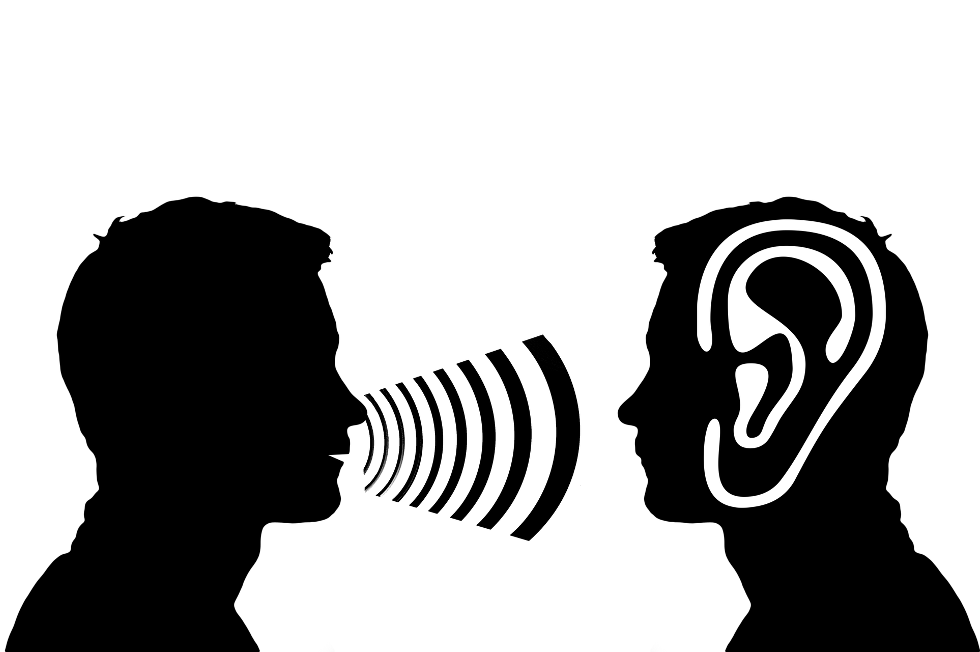
“Listening is a passive process of hearing[1] […] Active listening is the active process of listening to understand. To do this, it can be helpful for you to respond both verbally and nonverbally, to communicate comprehension. […] In contrast to passively listening, the active listener has a clear goal in mind: to capture and reflect both the emotional experience and the ideological perspective of the speaker[2].
Why is active listening important for mental health:
People speak to be heard and (for the most time) understood by others. There is a deep human need for connection. To connect with other people human beings communicate mostly via language. Communication is a complex system and as we all know often fails or goes wrong. When communication fails we might feel uncomfortable or solitary, when can often lead back to an absence of active listening skills that can have “serious consequences”. Active listening is an effective way to prevent communication failures and to connect properly with others. People who use active listening techniques are considered to be “emotionally in tune”, or as “pivotal in restoring relationship injuries”[3].
Active Listening Skills[4]:
- “Preparation means setting yourself up for success by stopping other tasks and making sure you have the mental, physical, and emotional capacity to focus on the conversation.
[1] Nemec, Spagnolo, & Soydon, 2017. In Parsons, Aleja: Active Listening: Definition, Skills, Techniques & Exercises. In: Berkeley Well-Being Institute. https://www.berkeleywellbeing.com/active-listening.html
[2] Rogers & Roethlisberger, 1991. In Parsons, Aleja: Active Listening: Definition, Skills, Techniques & Exercises. In: Berkeley Well-Being Institute
[3] Berger, 2015; Bodie, Vickery, Cannava, & Jones, 2015; Min, Jung, & Ryu, 2021. In Parsons, Aleja: Active Listening: Definition, Skills, Techniques & Exercises. In: Berkeley Well-Being Institute
[4] As suggested by Parsons, Aleja from Nemec, Spagnolo, & Soydon, 2017
- questions give the speaker a limited selection of responses (often yes or no).
- Paraphrasing means to restate the speaker’s content in your own words. While it may seem redundant and unnecessary, simply repeating back what you’ve heard communicates that you’re paying attention and understanding.
- Reflecting feelings asks you to empathize with the speaker by imagining how you might feel if you were in the speaker’s shoes. The more you can name the emotion, even if they haven’t stated it, the more the speaker is likely to feel acknowledged and validated“
Exercises for Active Listening[1]:
“Preparation:
Here’s a shortlist of questions you can ask yourself to help you prepare to be an active listener.
- Do I have the time for this conversation?
- Have I attended to my physical needs? (e.g. Am I hungry? Am I tired?)
- Have I cleared my mind so I can be attentive?
- Am I emotionally ready to have this conversation?
Open-ended questions:
Open-ended questions help facilitate the speaker sharing as much as possible. The more you can get the speaker to talk, the easier it can be to understand what she/he is trying to communicate. For example, rather than saying “Do you like chocolate cake?” (closed-ended), you might ask “What do you like about chocolate cake?” (open-ended). The latter question keeps the conversation flowing and allows you to gather more details and nuance about the speaker’s perspective. One of my personal favorite follow-ups is “Tell me more about that.” which is technically an indirect lead (Gerber, 2003), but functions the same as an open-ended question.
Paraphrasing:
Paraphrasing is my all-time favorite active listening skill. When I’m paraphrasing, I think of myself as a mirror reflecting back the speaker’s message. Of course, I’m putting the speaker’s ideas into my own words so the conversation doesn’t become robotic and uncomfortable but ultimately, it’s nothing more than repetition. Here are key questions you can ask yourself to help develop paraphrasing skills:
- What was the most important takeaway of what I just heard?
- If I had to summarize what I just heard, what would I say?
- What does the speaker think about this topic?
It’s important to remember that when you’re paraphrasing, you don’t have to agree with the speaker. As one of the hidden benefits of paraphrasing, by repeating back to the speaker what you just heard, you’re able to catch and correct any miscommunications. You can prompt this process by asking the following questions after paraphrasing:
- Did I get that right?
- Did I miss anything?
- Is that what you were trying to share?
Reflecting feelings:
Empathy can be hard and overwhelming because many of us aren’t used to doing it. For me personally, my first reaction when my daughter tells me she’s sad is to try to cheer her up. Instead, reflecting feelings encourages me to just verbally express that I know and understand how she’s feeling. Rather than “Don’t worry, things will get better.” I might say, “Wow, sounds like you’re really upset.” Rather than, “Why don’t you just [insert solution to fix the speaker’s problem]” I might say, “So are you saying you’re feeling
[1] As suggested by Parsons, Aleja
overwhelmed and stuck?” Speaking of my daughter, here’s a clip from a movie we enjoyed together that illustrates what I’m talking about:”
Technique 2: Conflict Resolution

What is conflict resolution:
“Conflict can always be explained by some tangible (like territory, money, prizes) or intangible (like power, prestige, honor) resource that is desired by both groups and is in short supply”. Conflict resolution is therefore “an agreement reached when all or most of the issues of contention are cleared up.” Humans who are in conflict usually experience “a wide range of psychological and physical health problems including weakened immune system, depression, alcoholism, and eating disorders” (Pruitt & Kim, 2004).
Some benefits of the conflict resolution technique are the following[1]: Stress reduction, Improved self-esteem, Improved self-efficacy, Better relationships, Increased energy.
Conflict Resolution Skills:
Christina Wilson, Ph.D., suggests some skills that might help to resolute conflicts that can occur during class, at work or in any other social situation:
1.Self-awareness, 2. Self-control, 3. Assertive communication, 4. Collaboration, 5. Problem solving, 6. Empathy
“1. Self-awareness
Self-awareness is described by Goleman (1995, p. 43) as “recognizing a feeling as it happens.” Goleman states that people with high self-awareness have moment-to-moment awareness and navigate life adeptly.
[1] According to (Arslan, Hamarta, & Usla, 2010; Sexton & Orchard, 2016; Bolton, 1986): in 14 Conflict Resolution Strategies for the Workplace by Christina R. Wilson, Ph.D., March 2022 https://positivepsychology.com/conflict-resolution-in-the-workplace/#home
- Self-control
Self-control is the ability to manage unruly impulses and emotions effectively. Because emotions play a central role in conflict, the ability to stay composed despite heightened emotions is essential to constructive resolution.
- Assertive communication
Bolton (1986) describes assertive communication as a dynamic communication style in which the speaker maintains self-respect, expresses personal needs, and defends their own rights without abusing or dominating others.
While an aggressive communication style may shut down a conversation, assertiveness encourages dialogue. This skill takes practice and courage. Bolton (1986) asserts that less than 5% of the population communicates assertively.
- Collaboration
According to Folger, Poole, and Stutman (2009), the goal of collaboration is to consider all the important needs of the primary parties and develop a solution that meets these needs.
- Problem-solving
Problem-solving in relation to conflict resolution is a strategy that pursues alternative solutions that satisfy the needs and goals of the parties involved (Pruitt & Kim, 2004).
- Empathy
According to Sorensen (2017), empathy is the ability to share and understand the emotions and feelings of others. Our understanding of another person’s perspective can increase the likelihood of emotional connection and collaboration.[1]”
Technique 3: Mental Hygiene
[1] Quoted by: https://positivepsychology.com/conflict-resolution-in-the-workplace/#home
What is mental hygiene?
“The psychological repercussions of this health emergency have highlighted the necessity to maintain well-being through mental hygiene. This medical practice, initiated by the American psychiatrist Clifford Whittingham Beers back in 1909, defines the set of practices that allow a person to enjoy mental health and be in harmony with his or her socio-cultural surroundings. The behaviours that it covers are designed to prevent negative behaviour, provide emotional stability and improve quality of life.
Good mental health enables us to learn, reason, interact, produce, face difficulties and put our best face on things, to quote a few examples. That’s why the UN and WHO warn that its decline presents a grave social and economic problem: depression and anxiety alone produce annual losses of over $1bn at global level, whilst serious mental health issues reduce life expectancy by 10 to 20 years.
Importance of mental hygiene:
In a world with over 264 million people suffering depression and a pandemic threatening an explosion in the number of cases, as the UN warns in the report mentioned earlier, mental health has become a top priority for governments. The UN itself considers it imperative to urgently strengthen psychological care services in the face of alarming figures coming from countries like the US, where 45 % of the population have seen a deterioration in their emotional state due to the coronavirus, according to a study by the Kaiser Family Foundation (KFF).
In these difficult times, mental hygiene is the key to protecting society’s most vulnerable, such as the young. In the UK, one of the countries worst affected by COVID-19, 32 % of adolescents with underlying health problems have been adversely affected by the pandemic, and 31 % of Italian and Spanish parents say that their children feel more lonely due to the isolation measures. These figures should not be overlooked since suicide is the second leading cause of death worldwide in the 15-29 age group.[1]”
[1] Quoted by: https://www.iberdrola.com/talent/mental-hygiene
Excersies for mental hygiene:
“Mental hygiene begins with the individual and we all need to look after our emotions, as the WHO recommends. For this, mental health experts agree on the need to adopt a series of habits for emotional self-care:
Cover your basic needs
The first thing we need to do to feel OK is to satisfy our basic needs, such as eating and sleeping properly. These are key to psychological well-being and we should not let them slip.
Look after your self-esteem and learn to be trusting
To enjoy good mental hygiene it’s important that we accept ourselves as we are. As well as having faith in ourselves, it’s also important to trust others.
Manage your emotions and learn self-control
This isn’t about blocking out our feelings or letting them take us over, but rather about knowing how to identify and interpret them and regulate their intensity in order to respond appropriately. That is why it’s key to emotional intelligence.
Manage expectations and set concrete objectives
Maintaining motivation and being perseverant is fundamental to surpass ourselves, which is why we need to set achievable goals so we do not become disheartened. We don’t have to abandon our dreams, but we do need to manage expectations and reality.
Think positively and be on the lookout for negative emotions
Sometimes, we’re bound to be plagued by doubt and fears, but we can always counter them and limit their extent through positive thinking.
Learn to relax and handle adversity
Stress is a very useful natural bodily reaction to cope with adverse situations. But it can be very harmful to health when things settle down and we must learn to switch off. For instance, through techniques as mindfulness.
Feed your social life and find support in others
As human beings we are sociable by nature and we need to interact with others to have fun and share our concerns.
Exercise regularly
Regular exercise helps, not just to keep us physically fit and improve our health, but also to clear our heads. Resting for a while after sport is also important.[1]”
[1] Quoted by: https://www.iberdrola.com/talent/mental-hygiene
Multiple choice
True/False
Short Answer Questions
Fill-in-the-blank
Matching
Mark the correct answers of each
Role Plays
Exercise group 1 (Active Listening):
Imagine the following situation: You are about to hold a class in geography and you notice one of your students is affected by something and seems occupied. After class he tells you he doesn’t like geography at all and only visit this class because his parents want him to. He would rather visit history class. How do you respond to him?
Exercise group 2 (Conflict Resolution):
One student in your class is a big fan of Marvel movies. One time he asks if the class could watch the movie Thor after class. You agree to that inquiry and forget about it shortly after. After about 1 month he comes back to you and insist on watching the movie that you permitted the class to watch. Unfortunately exams are soon and your class timetable doesn’t allow any spare time to watch a movie in class. The student gets disappointed and doesn’t want to participate in your class anymore. You feel bad about the situation and decide to talk to him: What do you say to him and in which way?
Exercise group 3 (Mental Hygiene):
There is a student in your class who’s mother has passed recently. This affected the student obviously in a very bad way. But you start to feel it affects you as well in an unexpected way. You feel very sorry for this student and cannot concentrate on class while she is in there, because your mind drifts off every time you see her. Other students parents start to complain about you class and why their children don’t learn useful content. You begin to feel something must be done for your mental health in order to feel better and be able to normalize your class again. Which exercises might help you to get better?
Classroom scenarios:
Scenario 1: Student A provokes student B during class with a snarky comment about student B’s fear of speaking in front of the class.
Reaction 1: The teacher doesn’t do anything and keeps teaching.
Reaction 2: The teacher indicates student A’s comment was wrong and harmful for student B in front of the class.
Reaction 3: The teacher takes both students out of class or waits until the class is over to speak with both of them.
Reaction 4: The teacher explains patiently why student A’s comment was not right during class and comes up with other similar bad examples.
Example 2: …
Reaction 1: …
This topic is about roles and responsibilities among students and teachers.
Multiple choice
True/False
Short Answer Questions
Fill-in-the-blank
Matching
Mark the correct answers of each
